
chitosan fresh-keeping method and dosage
Release:2026.05.201. Fresh-Keeping Mechanism
Chitosan is a natural non-toxic biodegradable alkaline polysaccharide. It forms breathable antibacterial films on the surface of fruits and vegetables, inhibits respiratory metabolism, reduces water loss, blocks harmful microorganisms and delays spoilage.
2. Common Chitosan Fresh-Keeping Methods
2.1 Coating Method (Most Widely Used)
Formula: 0.5–2% Chitosan + 1% Acetic acid (dissolving aid) + 0.1–0.5% Glycerin (plasticizer) + pure water
Operation steps:
1. Dilute acetic acid with water, add chitosan slowly and stir until fully dissolved (pH≈5.5)
2. Add glycerin and stir evenly, filter impurities
3. Soak fruits and vegetables for 1–3 minutes, drain well, store at room temperature or refrigerate
2.2 Spraying Method (Suitable for Mass Production)
Recommended concentration: 0.5–1% chitosan aqueous solution
Operation: Spray evenly on the surface, air dry naturally, no need to rinse
2.3 Dipping Method (Soft Fruits & Leafy Vegetables)
Recommended concentration: 0.3–0.8% chitosan solution
Soaking time: 30 seconds – 1 minute, drain then package
2.4 Compound Fresh-Keeping Method (Better Effect)
Chitosan mixed with 0.1% Vitamin C / Tea Polyphenols / Sodium Alginate for synergistic bacteriostasis and anti-oxidation
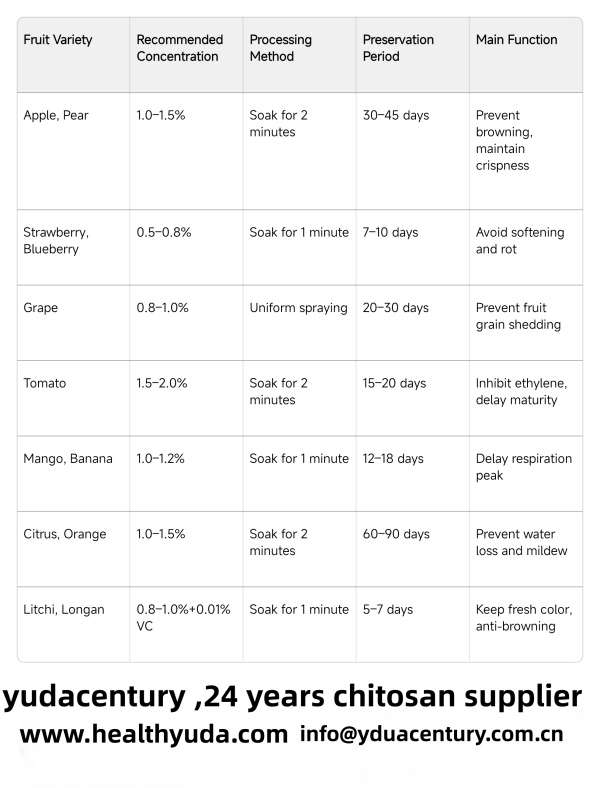
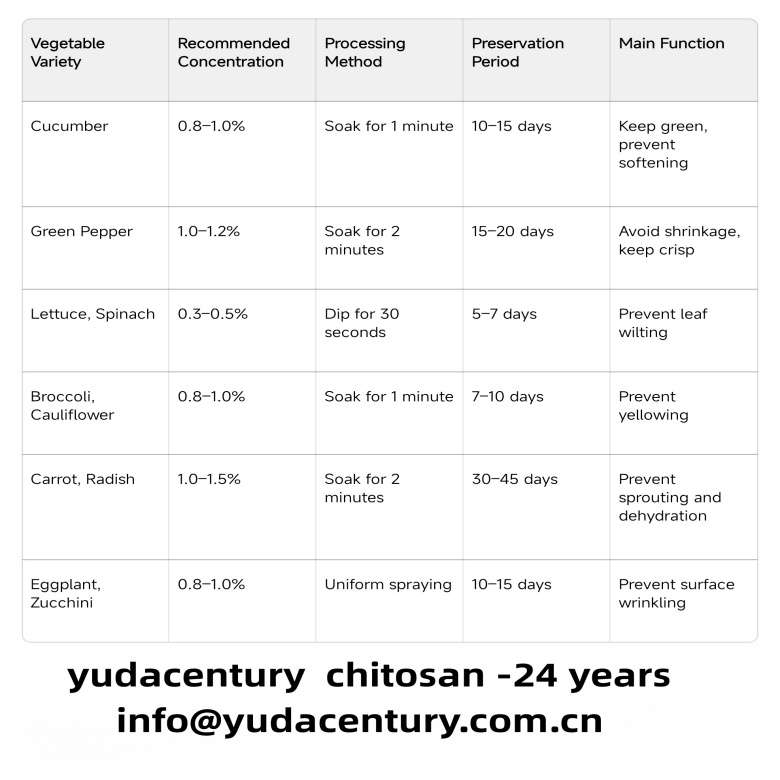
3. Chitosan Concentration & Usage Standard Table
Fruits
Vegetables
Vegetable Type Recommended Concentration Treatment Method Extended Shelf Life Notes
4. Key Operation Guidelines
1. Dissolution rule: Chitosan is insoluble in pure water, must be dissolved with 1% food-grade acetic acid
2. Concentration rule: Soft fruits & leafy vegetables use low concentration 0.3–0.8%; hard fruits & durable vegetables use high concentration 1.0–2.0%
3. Storage temperature: Best effect under refrigeration 4–10℃
4. Food safety: Food grade chitosan is edible directly without washing after treatment
5. Optimal molecular weight: 50–200kDa food grade chitosan is preferred
5. Common Troubleshooting
1. White film on surface: Excessive concentration or insufficient air drying, reduce concentration and extend drying time
2. Easy to mildew: Poor treatment or high humidity, enhance ventilation or add 0.1% potassium sorbate
3. Poor fresh-keeping effect: Unqualified chitosan raw material, replace standard food-grade chitosan
Yudacentury As a supplier of chitosan application solutions with 24years experience.
Our main products: chitin, chitosan, Hydroxypropyl Chitosan, Hydrochloride Chitosan, Chitosan Lactate, Carboxymethyl Chitosan.
With origin: Chitosan Fresh North Atlantic Shrimp Shell/Crab Shell Origin
Chitosan Aspergillus Niger Origin
Chitosan Agaricus bisporus Origin mushroom
More details and solutions ,please contact us.